Indigenous Flotilla Arrives in Peru to Share More Stories of Amazonian Resistance
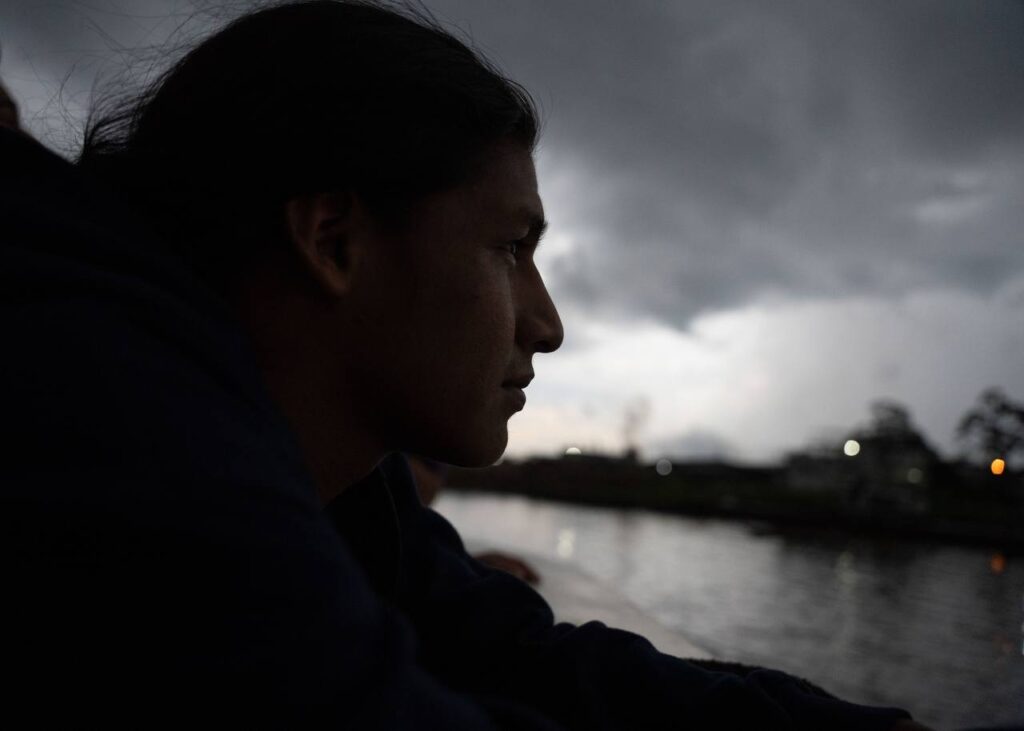
“Today we set foot on land in Iquitos,” says Lucia Ixchiu, part of the Yaku Mama Amazon Flotilla‘s Coordination team.
By Emergentes
October 23, 2025 15:50
By Lucía Ixchiu
Amidst the heat that embraces the Amazon jungle, after crossing the border from Ecuador to Peru and stopping at the Island of Yarina, we continued towards Iquitos, the largest city in the world inaccessible by road.
We docked around 4 PM and said goodbye to the pilots and boats that had accompanied us for several days. We arrived at the place where we would stay for the next three days of this journey upriver. Finally, we left the Napo River and met the immense Amazon River.
Between lines for food, lines to unload luggage, lines for mototaxis, and lines to board the buses that would take us to where we would sleep, we finally had the chance to stretch our backs on something other than the floor.
This journey is a profound existential transformation and, in my view, a precious gift for traveling one of the routes that allows us to traverse not only the river but also our inner selves. After disembarking, we still feel, for days on end, the sensation of being on the water.
Arriving at the hotel amidst the chaos and traffic was, without a doubt, another adventure. We were finally able to sleep and rest our bodies to continue the next day with an agenda led by Muyuna—a floating cinema collective from the city that works amidst the waters.
We began our tour in the Belén neighborhood, where we saw a peculiar market with all kinds of plants and species that only exist in the Amazon jungle—turtle eggs, edible grubs, diverse smells, and a polluted river were part of the scene, in stark contrast to the living rivers we had been observing before reaching the city.
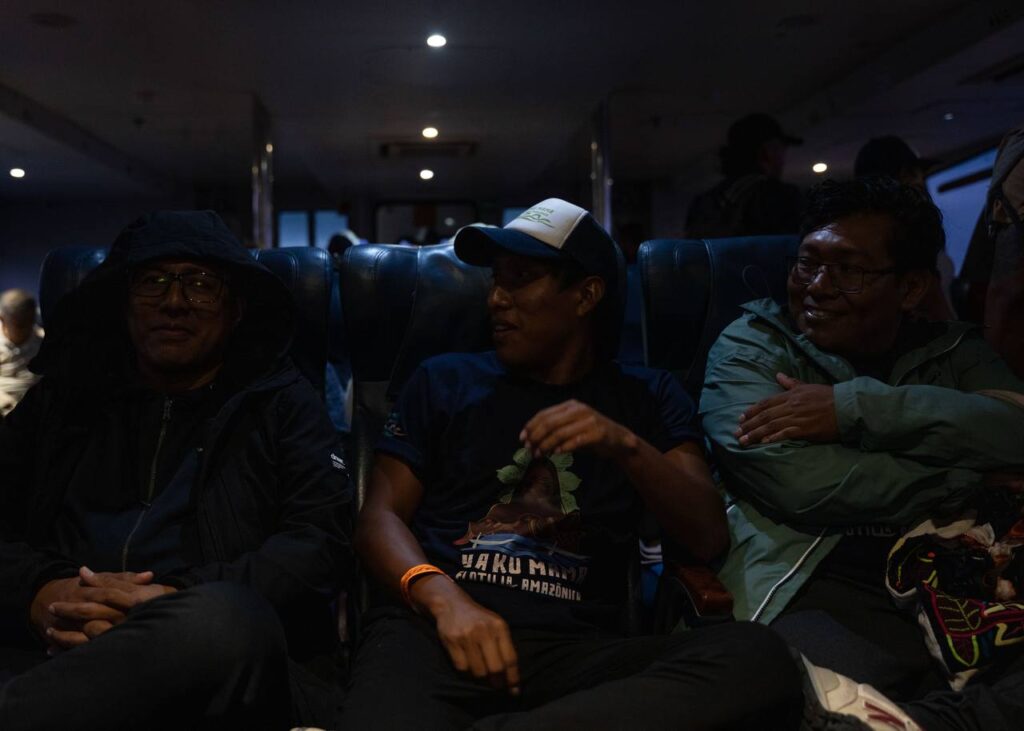
The city of Iquitos floods from December to May every year, and the population learned to live this way a long time ago. I find this surprising due to their ability to adapt to reality, although, of course, the changes and floods are also an effect of biodiversity destruction.
After lunch, we headed to the port to continue traveling through the lagoons and rivers of these territories. We arrived at Muyuna beach, or Isla Bonita, where we held an act of solidarity with Brazil. Yesterday, we learned that an offshore oil exploration license was granted to Petrobras. It is very powerful and painful that, in the midst of the flotilla, these things still happen, but at least we are together to support each other across territories.
Touching the earth is also part of this journey on water. Our Mayan ancestors said that part of balance is harmonizing water, fire, air, and earth, and that is what we seek now. We are drawing strength from the land, looking for a bit of calm to continue venturing into this jungle that is so intense and beautiful at the same time.
This trip dismantles myths and stereotypes about the jungle. Being here is not easy or romantic, but that’s how life is. The rashes on our skin and the thousands of bites from bugs, fleas, and mosquitoes remind us that honoring nature and being part of it also means accepting all of this—that leaving our comfort zone is part of breaking away from the convenience and parasitism of cities, and that returning to the land is anything but simple.
The jungle has its own time, its own rules, and its own path. Thank you to it for welcoming us and teaching us to walk with it.
Source: MidiaNinja