The Amazon Flotilla Yaku Mama Sets Sail: 3,000 Kilometers Through the Amazon to Bring Their Peoples’ Voice to COP30
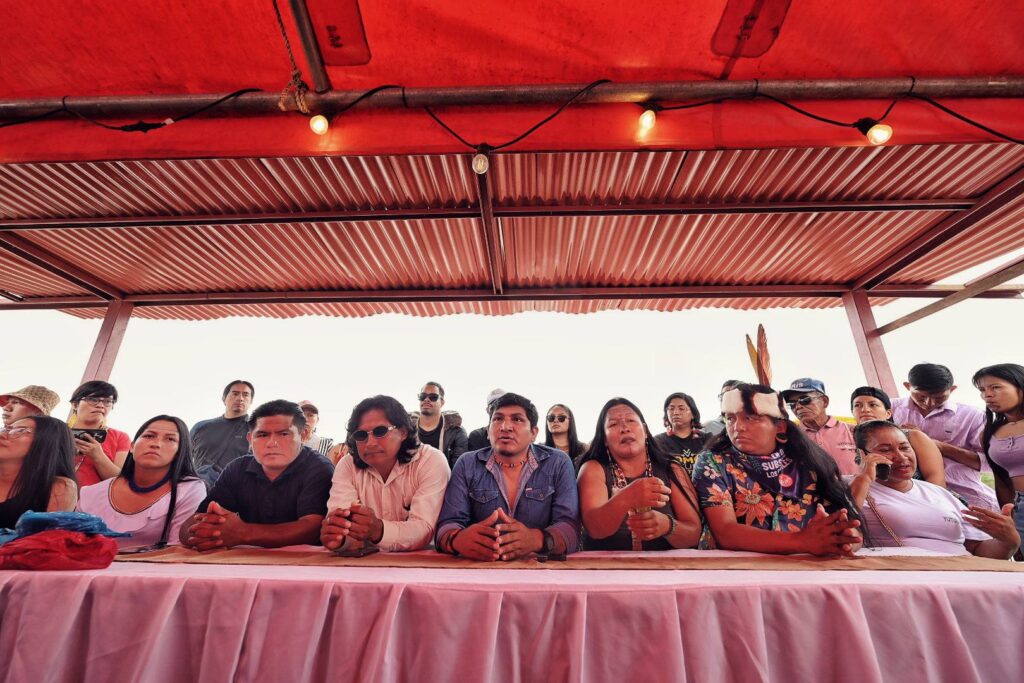
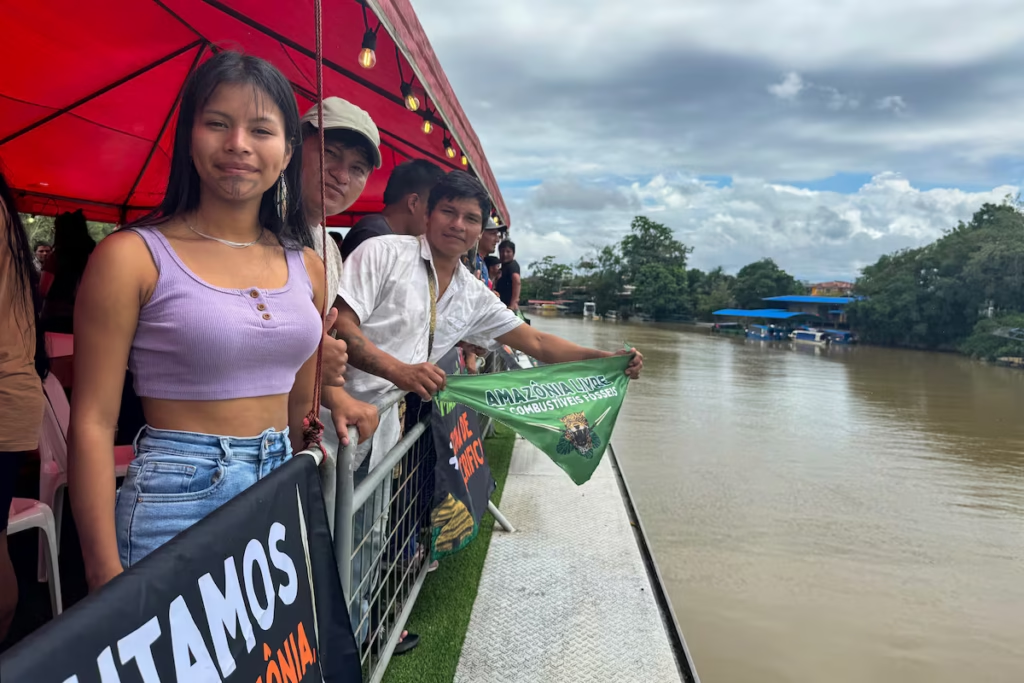
The Amazon Flotilla Yaku Mama Sets Sail: 3,000 Kilometers Through the Amazon to Bring Their Peoples’ Voice to COP30 Representatives of Indigenous communities have departed from the Andes in Ecuador, in the Amazon Flotilla Yaku Mama with the goal of ensuring the first climate summit held in the Amazon takes their demands, such as an end to fossil fuels, into account. The image of a woman carrying a live anaconda in her hands was a powerful sight on the morning of Thursday, October 16, at the port of the city of Francisco de Orellana, better known as El Coca, in the Ecuadorian Amazon. The banner bearing this image hung from a two-story boat, docked and awaiting its passengers. Beside it, black letters on an orange background stood out not only for their color but for what they announced: “Yaku Mama, Amazon Flotilla: from the Andes to the Amazon. On the way to Belém for COP30.” The presence of this boat in the Ecuadorian port marked the beginning of the journey for more than 50 Indigenous representatives and organizations from across the Amazon basin. For nearly a month, the flotilla will travel along the Amazon River and its tributaries to Brazil to participate in the United Nations Climate Change Conference (COP30), which will take place from November 10 to 21. This group will cover around 3,000 kilometers through four countries on various boats to bring Amazonian voices to the most important negotiations for the future of the planet. “The flotilla is a space to share experiences and reflect on issues that are discussed at the COPs and that have historically been addressed without the participation of Indigenous peoples,” explains Alexis Grefa, one of the youth representatives of the Kichwa people of Santa Clara, Ecuador, and part of the Amazon flotilla’s organizing team. At 29, Grefa is intimately familiar with how these negotiations are conducted, having participated in previous climate change and biodiversity COPs. On this occasion, as it is the first time the event is being held in an Amazonian city, he hopes that the demands of Indigenous peoples—such as direct financing, a just energy transition, the elimination of fossil fuels, and respect for prior consultation—will be taken into account. A Dream Come TrueThat Thursday morning, the boat began to fill with different accents, languages, and music. Some took photos, others explored the spaces, and a few sat to watch the landscape. The top deck became everyone’s favorite spot for its view of the Napo River. A few minutes into the journey, representatives of different Indigenous peoples and nationalities from the Ecuadorian Amazon offered words of encouragement and recalled the mission of the trip. “Let everyone know that in our communities, we are suffering from a giant monster that is attacking us,” said Elsa Cerda, a representative of the Yuturi Warmi women’s Indigenous guard, referring to mining and oil extraction. After a symbolic three-hour tour, the boat returned to the port of El Coca. To reach their first stop, Nueva Rocafuerte, on the border with Peru, it was necessary to take motorized speedboats, known as deslizadores, to shorten the travel time. Through his glasses, Grefa watched the banner from the port before departing. “It’s a collective dream,” he reflected, adjusting a t-shirt that also had a snake painted on it. This image of the anaconda, considered the keeper of the river, had already appeared in the dreams of people from different parts of the Amazon who helped organize the flotilla. That’s why, when the idea took shape, they decided to name it Yaku Mama (Mother Water) and use this serpent, which transforms into a woman, as their logo. The proposal to travel these rivers began to form when it was announced that Belém would host these negotiations. From that moment on, various organizations joined in to map out the route and define the activities. At each stop, events will be held to address issues relevant to those territories. In Ecuador, for example, before the flotilla’s departure from the Amazon, a visit was organized to the Cayambe glacier in the highlands to show the connection between the mountains, the páramos, and the rainforest. They also visited the country’s capital as a symbolic act. “Centuries ago, missions departed from Quito that claimed the discovery of the great Amazon River, bringing conquest to our territories,” says Leo Cerda, a Kichwa representative from Napo. Before arriving in El Coca, there was also a journey down the Jatunyaku River. For Noveni Usun, from the Dayak Bahau Indigenous group of Indonesia, visiting the communities on the banks of this river, which is affected by illegal mining in the Napo province, was one of the most impactful experiences. “This also happens in my region, and seeing how they fight here is very inspiring,” says the 28-year-old, who flew for three days from her country to Ecuador to be part of the flotilla. She is one of the members of this group, along with other representatives from Guatemala, Panama, and England, who are not from the Amazon basin but came to exchange experiences on the various threats affecting forests around the world. A Path to Bury Fossil FuelsIn El Coca, the day before the flotilla’s departure, a symbolic funeral for fossil fuels was held. Grefa and other group members carried a black cardboard coffin with signs on its sides that read “R.I.P. Oil” through the city streets. Behind them, the rest of the members marched with Yaku Mama banners and others with messages against fossil fuel exploitation. “Oil is part of biodiversity, and it is the companies that take it out of the earth and pollute. We are going to return it to where it belongs,” said Lucía Ixchiu, a Maya K’iche woman from Guatemala, as she received the coffin at the port. After lighting candles around it, symbolizing the deaths caused by fossil fuels and honoring murdered environmental defenders, representatives of different Indigenous nationalities of Ecuador showed their support for the act. The fight to reduce and eliminate fossil