Navigation Diary

News

Yaku Mama Navigation Diary: The Flotilla Was Born from a Dream

Yaku Mama Navigation Diary: The Flotilla Was Born from a Dream By: Leo Cerda In this entry of the Yaku Mama Navigation Diary, I want to share the dream that started it all. Our struggle is for racial, social, and climate justice. The Amazon is at a tipping point — it’s now or never. We need to amplify our voices and claim our rightful place in decision-making spaces, demanding that climate finance reach our communities directly and effectively. It’s not enough to acknowledge our role; it is essential to ensure resources that strengthen our autonomy, our initiatives, and our right to live in and defend our lands. If we fail to provide real and sustained support to those of us protecting the forests, we risk losing them forever — and without forests, there can be no future for humanity. Let this call resonate loudly: the world must listen to, learn from, and collaborate with Indigenous peoples to achieve true and lasting solutions. The Yaku Mama Amazon Flotilla carries a shared message: we are not alone, and Indigenous communities offer powerful climate solutions grounded in lived experience. As we travel along the rivers of the Amazon, we carry an invitation — to life, to hope, and to reconciliation — challenging the legacy of violence, exploitation, and colonization. This journey is not one of conquest or destruction, but of unity, reconnection, and solutions from the territory itself — a living testament to the strength and resilience of the Amazon and its peoples.
News

Yaku Mama Navigation Diary: Inside the Indigenous Flotilla on its Way to COP30

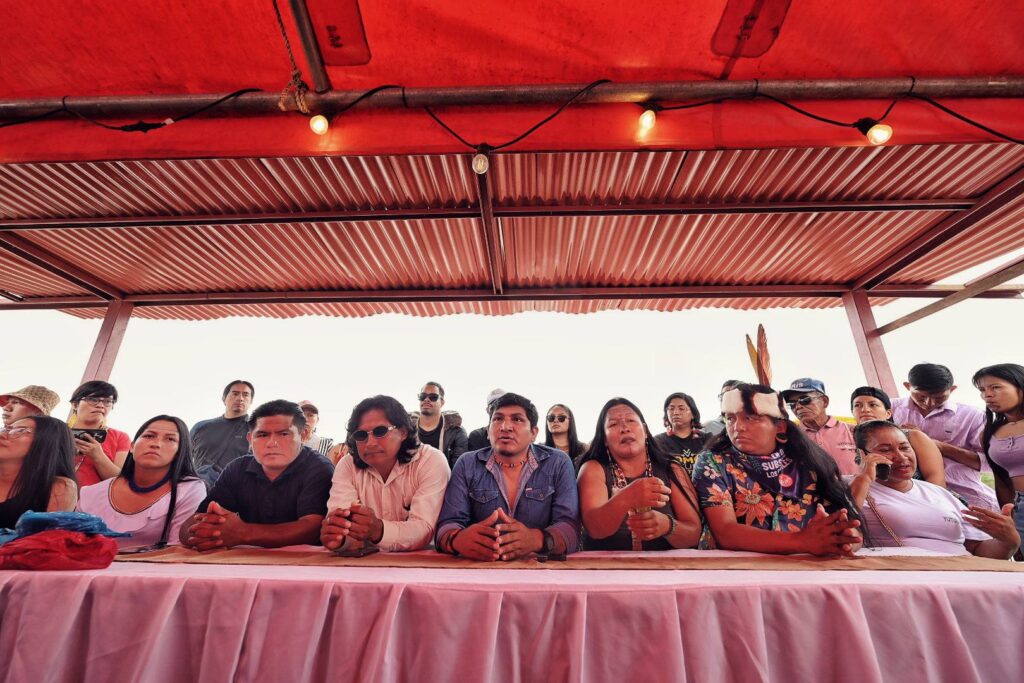
Yaku Mama Navigation Diary: Inside the Indigenous Flotilla on its Way to COP30 This will be a series of narrative and testimonial texts from the Yaku Mama Flotilla as it navigates the Amazon River towards Brazil.By Emergentes By: Lucía Ixchiu First Week With eyes full of green, amidst the sounds of water and the jungle, I begin this account from the heart of the flotilla. What is a Maya K’iche woman doing in the middle of the Amazon rainforest, on her way to Brazil? I feel the river and the jungle, and how we connect as the journey progresses. Between the waters of the Napo and Yasuní rivers, we head towards Pantoja, on the border between Ecuador and Peru, a region that, years ago, was in conflict. With the permission and the sound of grandmother Cayambe, the glacier where the Amazon River is born, and with our offering received by the earth, we began this journey. We have already covered a third of this voyage of sisterhood between territories, of solidarity and shared learning. For the K’iche people, forests are an essential part of their existence. To honor the Amazon is also to honor all the jungles and forests of the world. Our eyes fill with colors as we contemplate the biodiversity, but our souls ache knowing it is threatened by oil companies and all kinds of extractive industries that see it as a resource and a profitable business. The songs of birds break the silence, and the sound of water accompanies us on our second day down the river. The Waorani peoples lead the protection of the Yasuní National Park, having lived with it for hundreds of years, and today we came to their home. This is also the home of the pink river dolphin, which we briefly saw hide in the waters of the Jatuncocha lagoon, as well as hundreds of thousands of species that make up this great grandmother we call the Amazon rainforest. Right now, we are navigating downriver, to the south, to continue with this flotilla of hope and solidarity among peoples. For most of us participating in this journey, this is a territory we are visiting and observing for the first time. In Coca, we held an exchange to learn about the experiences of the peoples and organizations confronting fossil fuels. At the end of the day, we participated in a march for Mother Earth through the town’s streets, culminating in a political act where we covered the statue of Francisco de Orellana, to whom the conquest of the Amazon is attributed. We named the defenders of the Amazon who were taken from us and concluded with an exchange of speeches before embarking the next day. On this flotilla, composed of several small boats, we, Indigenous people from different parts of the continent and the world, are traveling. We have come to travel a route that seeks to amplify the voices of the territories and their first inhabitants.

Scroll to Top
Privacy Overview

This website uses cookies so that we can provide you with the best user experience possible. Cookie information is stored in your browser and performs functions such as recognising you when you return to our website and helping our team to understand which sections of the website you find most interesting and useful.